
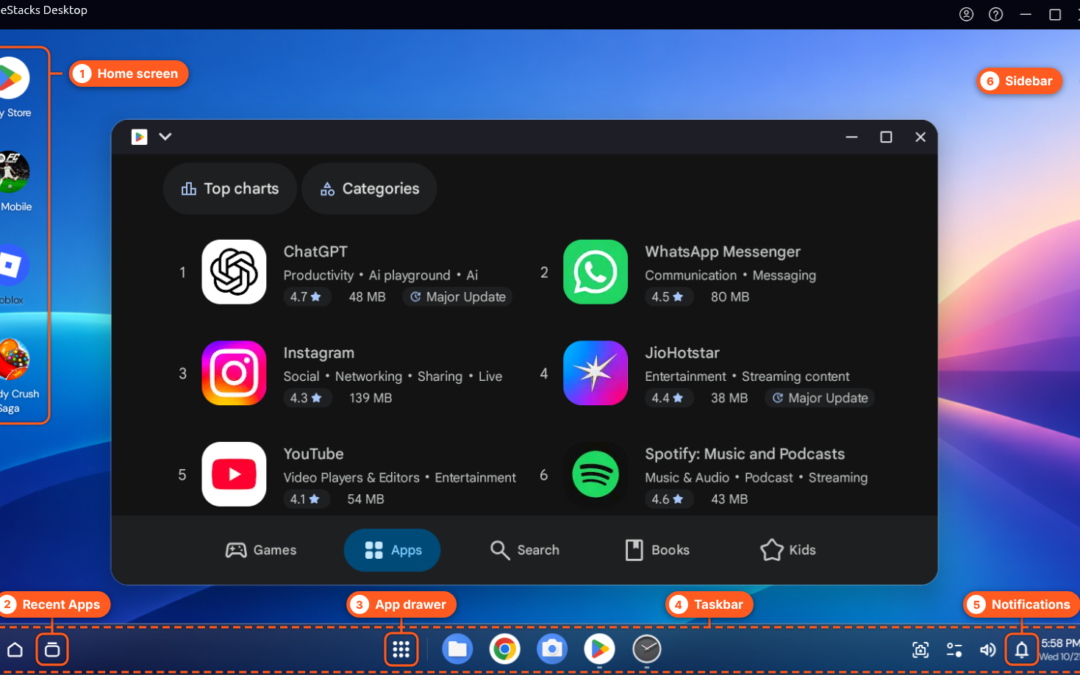
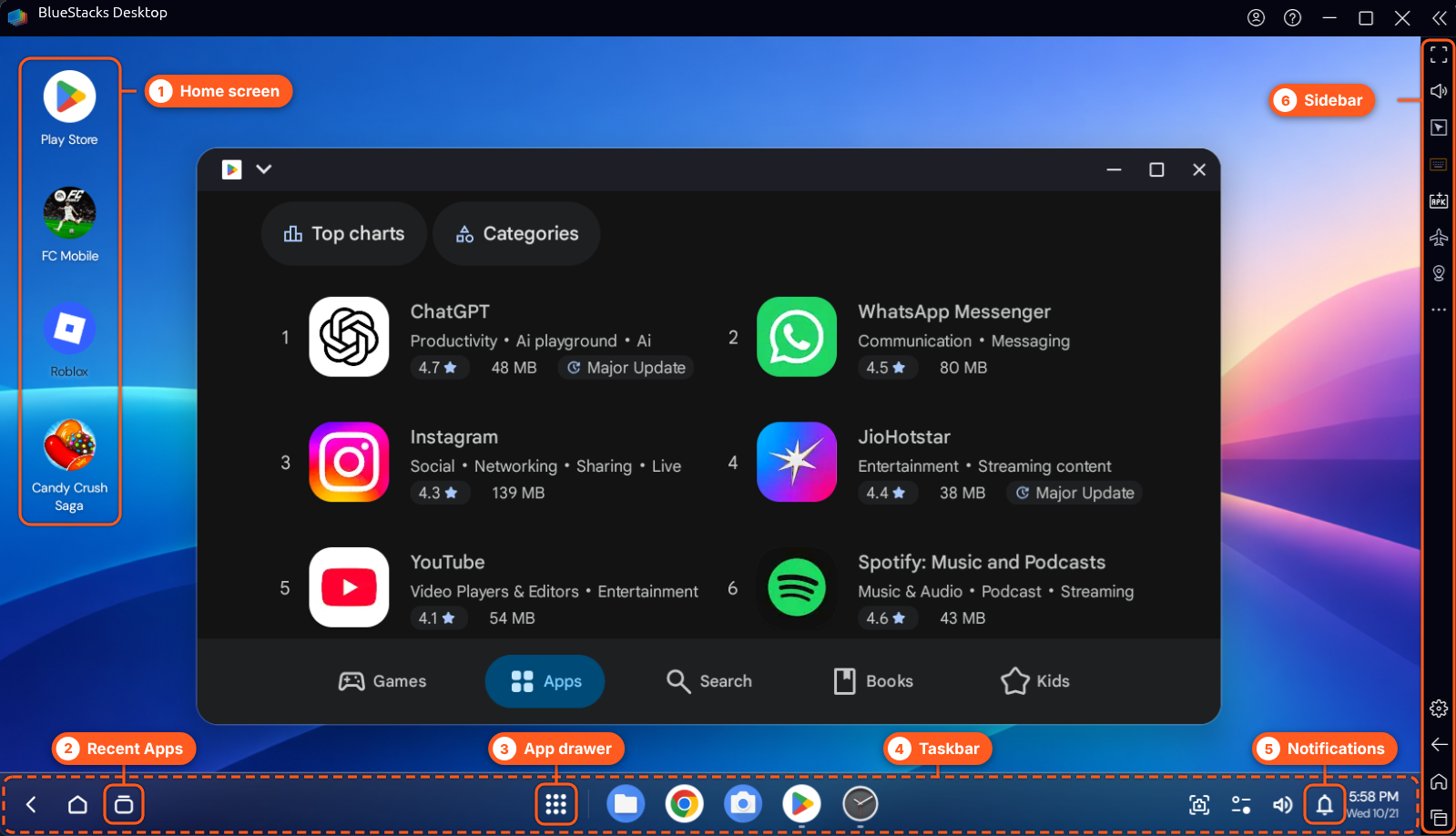
The best Android emulator for an app depends on what “run” means. If you want to test an app you are building, Android Studio’s Emulator is the right starting point. If you want to use consumer apps on a computer, BlueStacks is a more approachable option, but it cannot promise that every app will work. App developers, games and services may restrict emulator use or require phone hardware that a virtual device does not reproduce.
Choose by task
For app development and testing: Android Studio Emulator
Android Studio lets developers create Android Virtual Devices with different screen sizes, API levels and device profiles, then run and debug an app from the same development environment. It supports testing common conditions such as location, rotation and network behaviour. This is the most useful option when you need repeatable test configurations and access to Android debugging tools.
For using Android apps on a computer: BlueStacks
BlueStacks is built for desktop use and is designed to make supported Android apps and games easier to launch with keyboard, mouse or controller input. It is a practical first trial for casual use, but it is not a substitute for an Android phone. Some apps may be unavailable, require Google Play certification, depend on sensors or phone services, or block virtual devices.
For games with their own PC client: check the publisher
Some mobile games have official PC clients or named emulator partners. Those may provide a more predictable experience than a general-purpose Android player. Check the game publisher’s current support page and terms before installing a third-party emulator, particularly for games with anti-cheat or competitive matchmaking.
Why compatibility varies
Android apps can depend on a particular Android API, processor architecture, Google Play services, hardware sensors, camera behaviour, secure device checks or mobile network features. A virtual phone may reproduce some of these features and approximate others, but not every app treats it as a real device. A successful install does not guarantee that sign-in, payments, notifications or protected media will work.
Do not assume that an emulator can bypass an app’s device requirements or account protections. If an app says it requires a supported phone, use a compatible device or contact the app developer. Avoid downloads that promise to unlock blocked features or ask you to disable security protections.
A safe setup checklist
- Download the emulator from the project’s official site or a trusted app store.
- Install apps through the publisher’s official listing when available; check the publisher name before signing in.
- Review the emulator’s permissions, bundled offers and account prompts.
- Use a separate test account for app development and avoid entering sensitive credentials into an emulator you do not trust.
- Test the exact app and workflow you need before relying on it.
Which option should you choose?
For a developer building an Android app, use Android Studio’s Emulator and test on at least one physical device before release. For casual app use or Android games on a computer, try BlueStacks and check the individual app’s support. For a game with an official PC client, compare that with the emulator route. Our main Android emulator guide compares the broader options; developers can continue to the developer emulator guide.
Official references: Android Emulator documentation and BlueStacks.