
An Android emulator lets you run Android apps and games on a computer. The right choice depends less on a universal ranking and more on what you need: broad app compatibility, game controls, developer tools, or an open-source setup. This guide compares established options by their strengths and trade-offs, so you can choose with realistic expectations.
Quick picks
- Best starting point for Android games on Windows: BlueStacks, for its approachable setup, game controls and multi-instance tools.
- Best for app testing: Android Studio’s Emulator, because it works with Android development tools and configurable virtual devices.
- Best open-source option: Android-x86 or a compatible Android-based desktop project, for technically confident users willing to handle installation and hardware compatibility.
- Best for a lightweight test device: The emulator included with Android Studio, configured to match the screen size and Android version you need.
These are different kinds of products. A gaming emulator is tuned for convenience and keyboard or mouse input; a developer emulator is designed to reproduce device configurations and inspect app behaviour. Neither one guarantees that every app, game, streaming service or security-sensitive feature will work.
How we compare Android emulators
We judge an emulator by practical fit: how clearly it explains setup, whether it supports the operating system you use, how much control it offers over resolution and performance, and whether its intended use is transparent. Performance depends on the computer’s processor, graphics, memory, drivers and the Android image being run; a brand name alone cannot predict frame rate.
BlueStacks
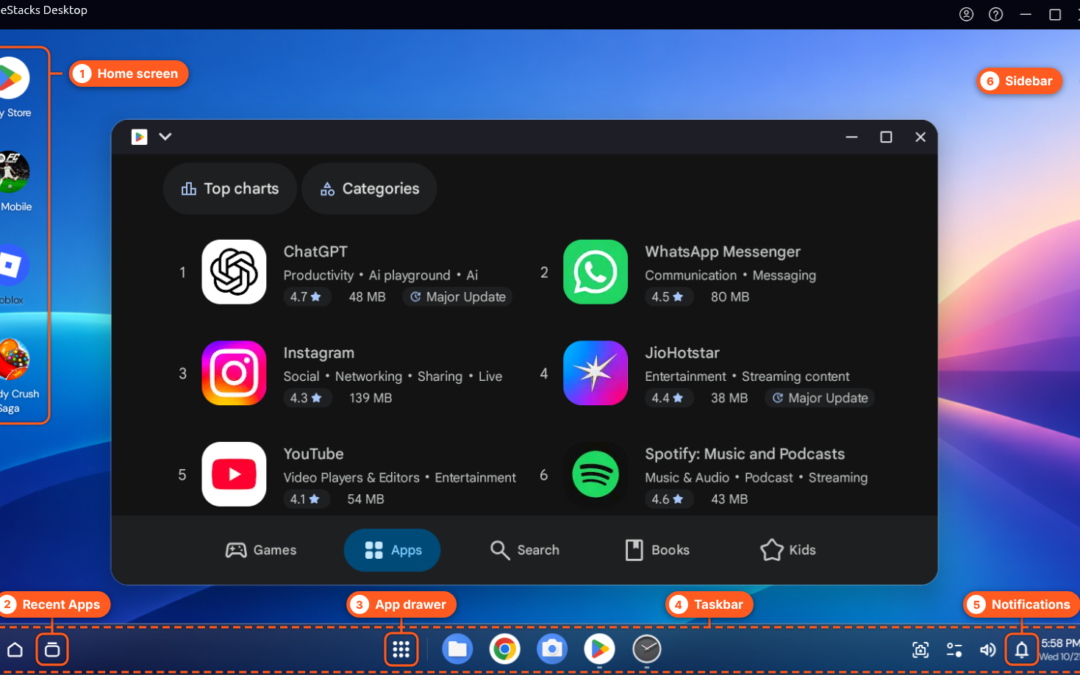
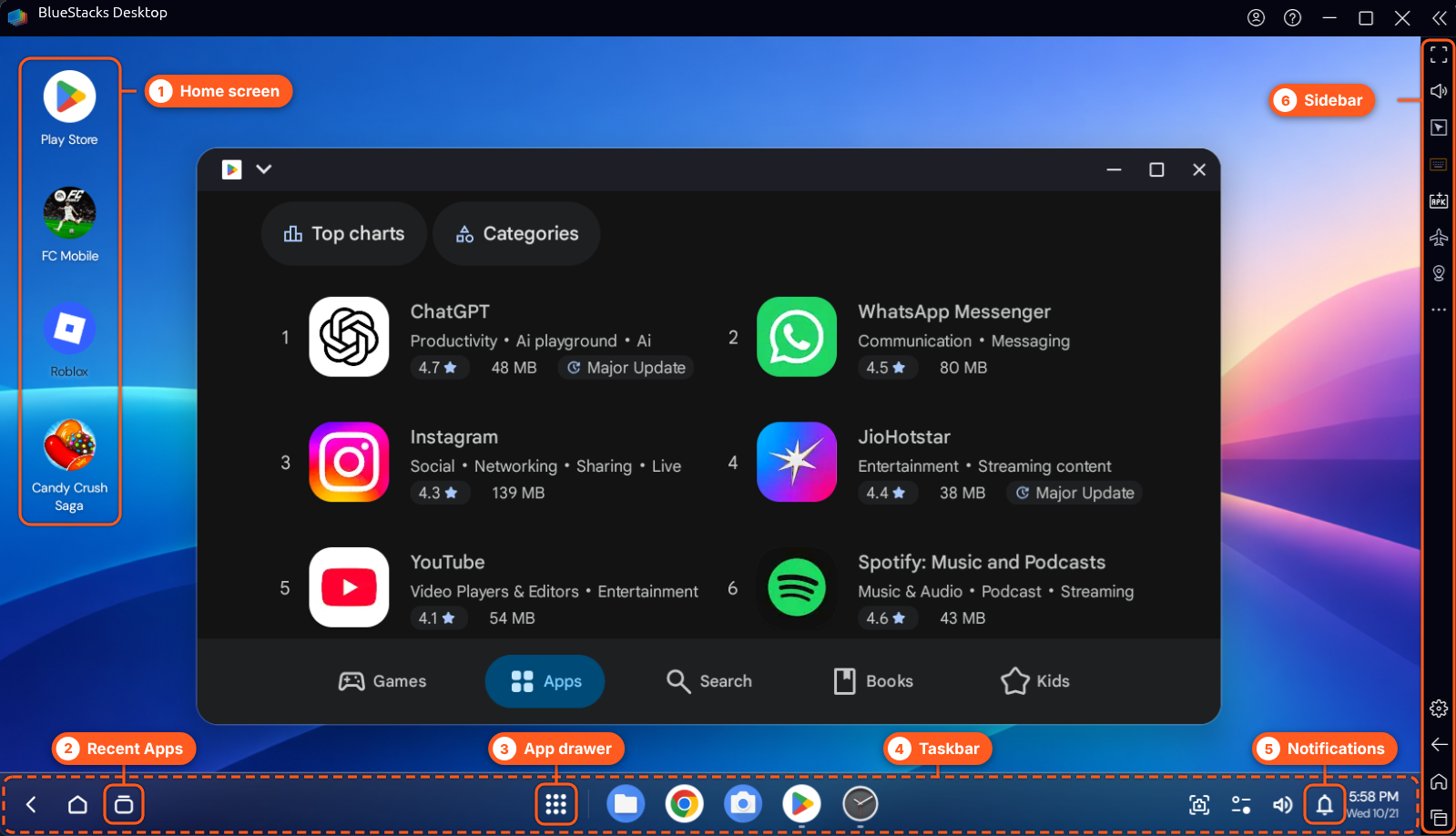
BlueStacks is a sensible first try for people who want Android games on a Windows PC or Mac. Its interface includes game-oriented features such as keyboard mapping, multiple instances and controls for display settings. Those conveniences can make a phone-first game easier to play with a keyboard and mouse. The trade-off is that it is a larger, game-focused application, and some games may not support emulators or may enforce their own compatibility rules. Download it from the official BlueStacks site, review the installer options, and check each game’s current requirements.
Android Studio Emulator
Google’s Android Studio Emulator is the strongest choice when the purpose is app development or testing. It can create virtual devices with different screen sizes and Android versions, integrate with debugging tools, and simulate some hardware conditions. It is not intended to be the simplest way to play mobile games: first-time setup takes longer, and you need to understand Android Studio’s device manager and system images. For a developer, that extra control is the point.
Other Android-based desktop systems
Android-x86 and related projects can install or run an Android-derived system on supported PC hardware. They may suit people experimenting with a spare computer, but compatibility is uneven: Wi-Fi, graphics, touch, sleep and audio support can depend on the exact device. Treat these as hands-on projects rather than polished drop-in replacements for a phone. Back up data before changing partitions, and follow the project’s own installation instructions.
What to check before installing
- Operating system: Confirm that the current release supports your Windows or macOS version. Support can change, so use the project’s own requirements page.
- Virtualisation: Hardware virtualisation and Windows security settings can affect whether an emulator starts or performs well. Follow the vendor’s current setup guidance rather than changing firmware settings blindly.
- Memory and storage: An emulator needs room for its Android image, apps and game data in addition to the host operating system. Leave free storage for updates and caches.
- App compatibility: Banking apps, DRM-protected video, games with anti-cheat systems and apps that rely on phone hardware may refuse to run or behave differently.
- Privacy: Install only from the developer’s official site or a trusted app store. Review permissions, bundled offers and account sign-in prompts before accepting them.
A practical setup
Start with one emulator and one app. Install the emulator from its official source, let it complete its first-run update, then test the exact app you care about before tuning anything. If performance is poor, close unnecessary host applications, lower the emulator’s resolution and check that graphics drivers are current. Allocate more CPU cores or memory only when the developer recommends it; assigning nearly all available resources can make both the host and virtual device less responsive.
For gaming, test input mapping and controller support inside the game itself. A control layout that works in a menu may not suit a fast action game. For development, use a virtual-device profile close to the real screen size and Android version you are targeting, then test on a physical device before release.
Android emulator downloads and guides
Browse the individual product pages below. Platform support can change, and legacy projects may no longer offer safe, maintained installers.
Windows emulators for apps and games
 Windows
BlueStacks
Popular Android app player for PC gaming and everyday apps; game compatibility varies.
 Windows
GameLoop
Tencent’s Android gaming platform, focused on supported mobile games and controls.
 Windows
 Windows
MEmu App Player
Android player for PC gaming, with configurable controls and device profiles.
 Windows
MuMu Player
NetEase Android game player; availability and features vary by region and build.
 Windows, macOS
Nox Player
Desktop Android player with keyboard controls; check current platform support before installing.
 Windows · legacy
Development and browser testing
 Windows, macOS, Linux, cloud
 Windows, macOS, Linux
Android Studio Emulator
Google’s development emulator for building, testing and debugging Android apps.
 Chrome browser · legacy
ARC Welder
Discontinued Chrome app for limited Android app testing; not a modern general-purpose emulator.
Older emulator projects
 Chrome browser · legacy
ARChon for Chrome
Community project for running select Android apps in desktop Chrome; compatibility is limited.
 Windows, macOS · legacy
Andy
Older desktop Android player; current maintenance and trusted downloads may be unavailable.
 Windows · legacy
Droid4X
Legacy Windows emulator; treat old installers cautiously and check source authenticity.
 Windows · discontinued
LeapDroid
Discontinued Windows emulator; no longer a practical choice for supported app testing.
 Windows · discontinued
AMIDuOS PRO
Discontinued Android-on-Windows software; avoid unofficial repackaged installers.
 Windows · legacy
 Windows · discontinued
Legacy and discontinued software is listed for reference. Use a current official source where one exists; avoid mirror sites and repackaged installers.
Android-based PC systems
 PC installation · legacy
PrimeOS
Android-based desktop operating system installed on PC hardware, not a Windows emulator.
 PC installation · legacy
Phoenix OS
Android-based PC operating system; installation and hardware support are project-dependent.
 PC installation · discontinued
Remix OS
Discontinued Android desktop operating system, not a current emulator recommendation.
Common questions
Are Android emulators legal?
The emulator software itself is generally a tool, but the rules for apps, games and services depend on their licences and local law. Use software you are authorised to access and check the terms for the specific app or game. An emulator does not grant rights to copy or bypass restrictions.
Can an emulator replace an Android phone?
No. It can be useful for testing and some apps, but it does not reproduce every phone feature. Camera behaviour, sensors, cellular service, secure hardware, push notifications and app-store certification can differ.
Which emulator is fastest?
There is no dependable universal winner. Results change with the computer, graphics driver, Android version, resolution and application. Try the official build on your own system and compare the app you actually plan to use.
Choose the tool that matches the job
For casual Android gaming, start with BlueStacks and confirm the game supports emulator use. For building or debugging apps, use Android Studio’s Emulator. For a spare-PC experiment, consider Android-x86 only if you are comfortable troubleshooting hardware support. Related reading: our video game guides and the retro emulator guide.
Official references: BlueStacks · Android Emulator documentation · Android-x86 project.
More Android emulator guides
Choose a focused guide for your operating system, use case or emulator. Requirements and availability can change; check the linked project’s official documentation before installing.
Platform guides
- Android emulators for Windows
- Android emulators for Windows 11
- Android emulators for macOS
- Android emulators for Linux
- Android Studio for app testing
- Emulators for Android app development
Gaming and performance
- Android emulators for PC gaming
- Running Android games on PC
- Playing Call of Duty: Mobile on an emulator
- Playing Free Fire on PC
- How much RAM an emulator needs
- Reducing emulator resource use
- Making Android games run more smoothly
Emulator profiles and apps
- BlueStacks guide
- GameLoop guide
- Genymotion guide
- LDPlayer guide
- MEmu guide
- MuMu Player guide
- Nox Player guide
Browse all Android emulator articles in the archive for additional guides, including older products and system versions.