
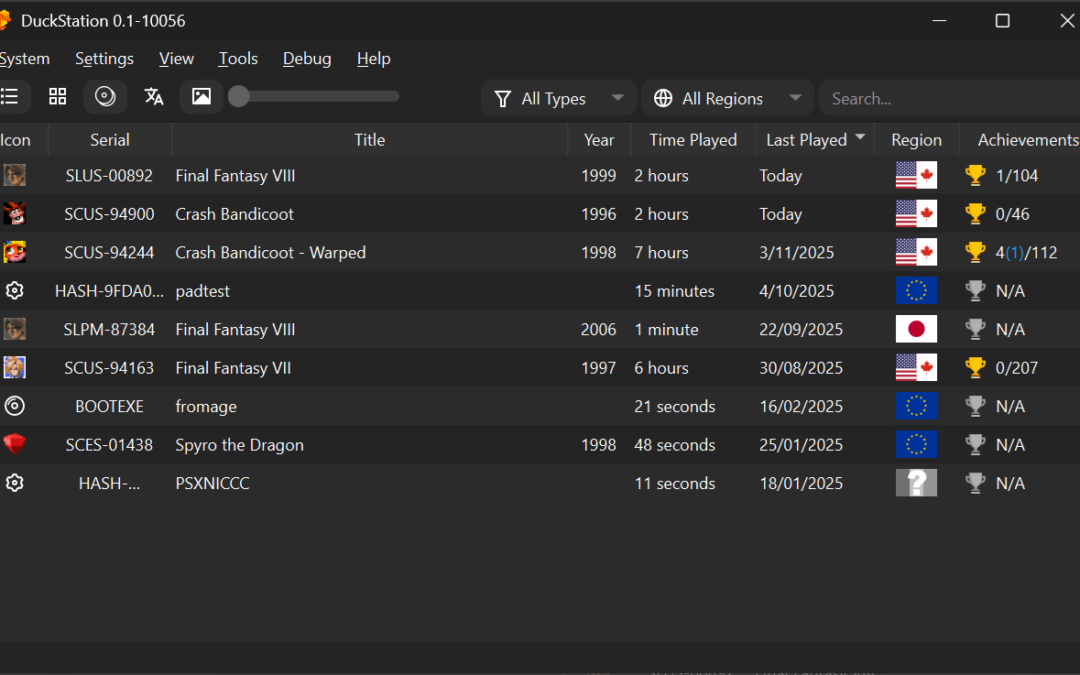
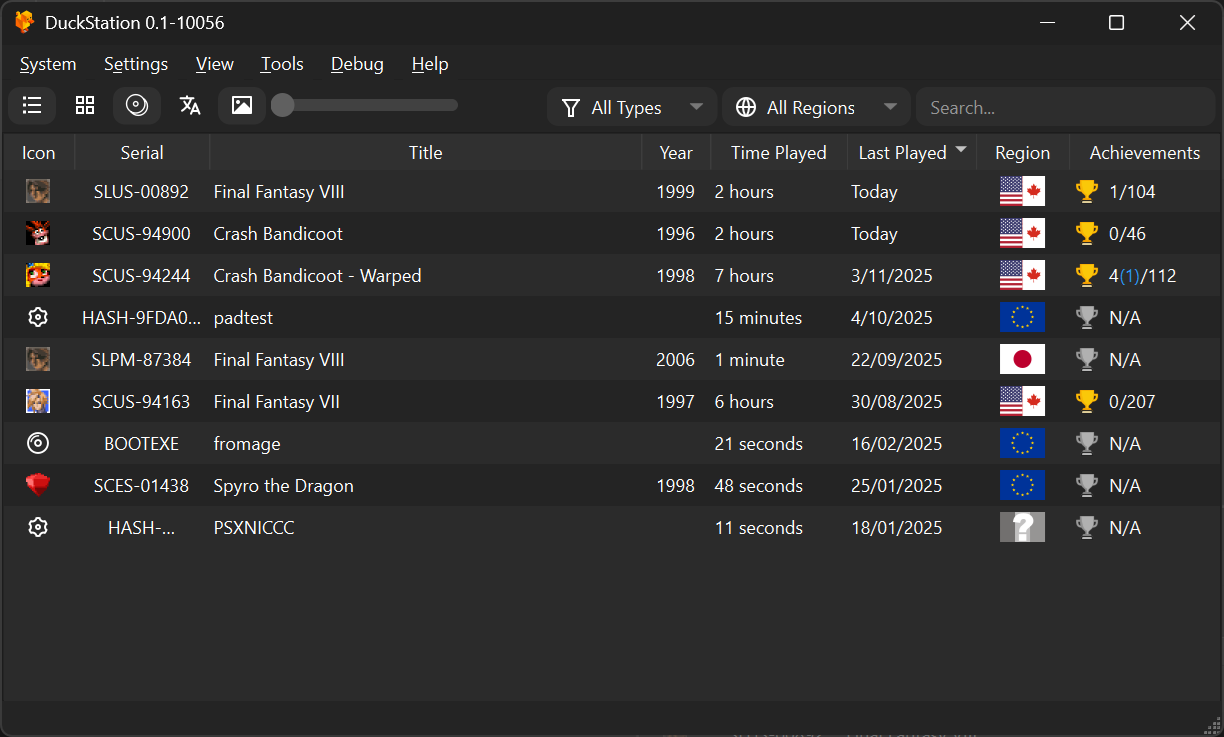
For original PlayStation games on a PC, DuckStation is the strongest starting point for most people. It is a dedicated emulator with a maintained desktop interface, controller mapping, save management and optional visual enhancements. Its focus is the original PlayStation, so it is a more direct choice than installing a multi-system frontend and searching for a suitable core.
Why DuckStation is a practical PS1 choice
DuckStation aims to balance accuracy, performance and long-term maintainability. The default configuration is designed to run compatible games without relying on a long list of hacks. Optional features such as higher internal resolution and geometry correction can make games look cleaner on modern screens, but they can also change the original presentation or expose title-specific issues. Start with defaults and change settings only when a game needs it.
What you need before setup
DuckStation’s project documentation says a PlayStation BIOS image is required and is not distributed with the emulator. Follow the project’s instructions for obtaining a BIOS from hardware you own and selecting the matching region where possible. The emulator also needs game data in a supported format. A physical disc, a game image and the legal rules around making a copy are separate matters; laws differ, so check local requirements and do not download copyrighted game files from unofficial collections.
Controls, saves and enhancements
A modern controller is usually the most comfortable way to play games designed around the original PlayStation pad. DuckStation supports common controller input methods and lets you remap controls. Its virtual memory cards provide a familiar save workflow, while save states can help when testing or revisiting a difficult section. Keep a separate backup of memory-card files before moving folders or changing builds.
If you want a faithful look, leave resolution and filtering close to the defaults. If you want a sharper image, raise internal resolution gradually and test the game’s menus, 2D effects and cutscenes as well as ordinary gameplay. A visual tweak that improves one title can cause texture or blending glitches in another.
Compatibility and troubleshooting
No compatibility claim applies to every game and every computer. Check the project’s current compatibility resources, use an official release, and update graphics drivers if rendering fails. If a game has audio, timing or display problems, return to default settings before trying a specific fix. Avoid “preconfigured” downloads from third-party sites; they may bundle copyrighted files or unwanted software.
When another option makes sense
If you already use RetroArch for several older consoles, its interface may be convenient, but you will need to choose and configure a compatible PlayStation core. For the PSP, use our PPSSPP guide; for PS2, see the PCSX2 guide. The PlayStation emulator overview compares these systems.
Download and reference
Download DuckStation from the official project site and consult its documentation and repository for current requirements. Choose it when you want a dedicated PS1 emulator with straightforward defaults and useful optional enhancements.