
BitTorrent is a file-transfer protocol, not a guarantee that a download is lawful or safe. A torrent can distribute an operating-system image just as easily as it can distribute material shared without permission. For that reason, this guide focuses on legitimate sources that publish torrents for their own software and public-domain material, rather than ranking pirate indexes whose contents, domains and safety change constantly.
Legitimate places to find torrent downloads
Ubuntu
Ubuntu publishes official BitTorrent downloads for its operating-system images. Its alternative-download page explains how to obtain the files, while the main download site provides the canonical release information. Use the Ubuntu domain as your starting point; do not rely on a third-party mirror’s filename alone.
Debian
Debian provides torrent downloads for its installation media. The Debian CD pages identify the available images and explain the supported download options. After downloading, follow Debian’s official verification instructions so you can check that the image is complete and authentic.
Internet Archive
The Internet Archive hosts many kinds of material, and some item pages offer torrent files. Availability of a torrent does not by itself prove that the uploader had the rights to distribute the item. Check the item’s rights statement and the source before downloading, especially for commercial films, books, music and software.
Open-source projects and creators
Some Linux distributions, game developers, artists and research projects offer BitTorrent as one of their own distribution methods. Start from the project’s official website or repository and use only the torrent it links to. For anything released under an open licence, read the licence terms; attribution, redistribution and commercial-use conditions can differ.
What you need: a torrent client
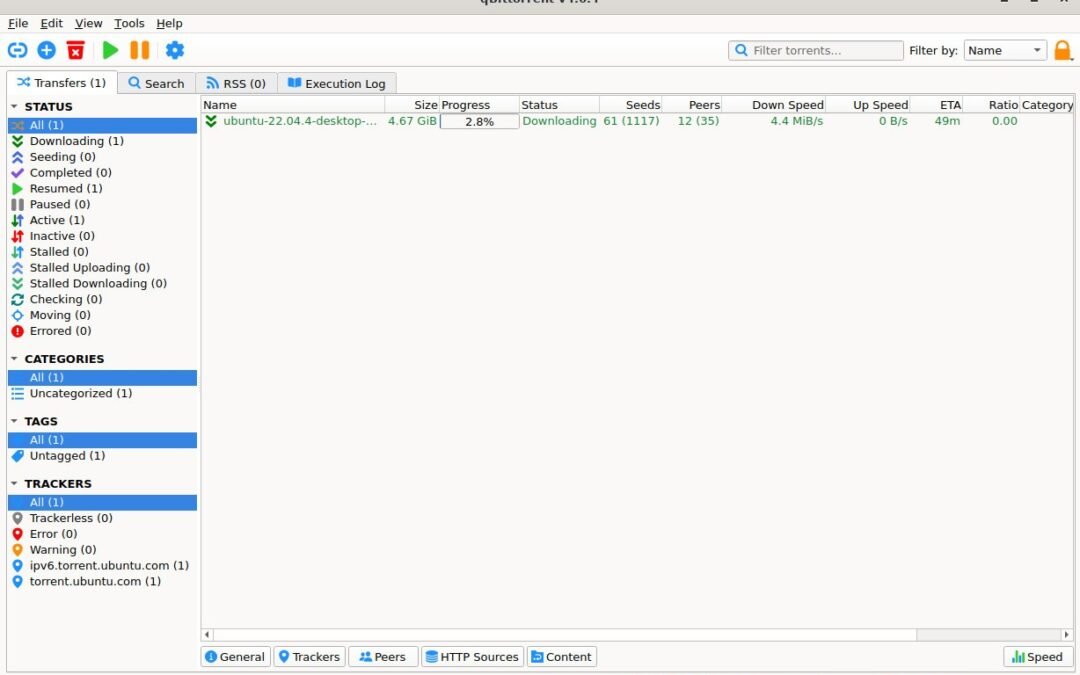
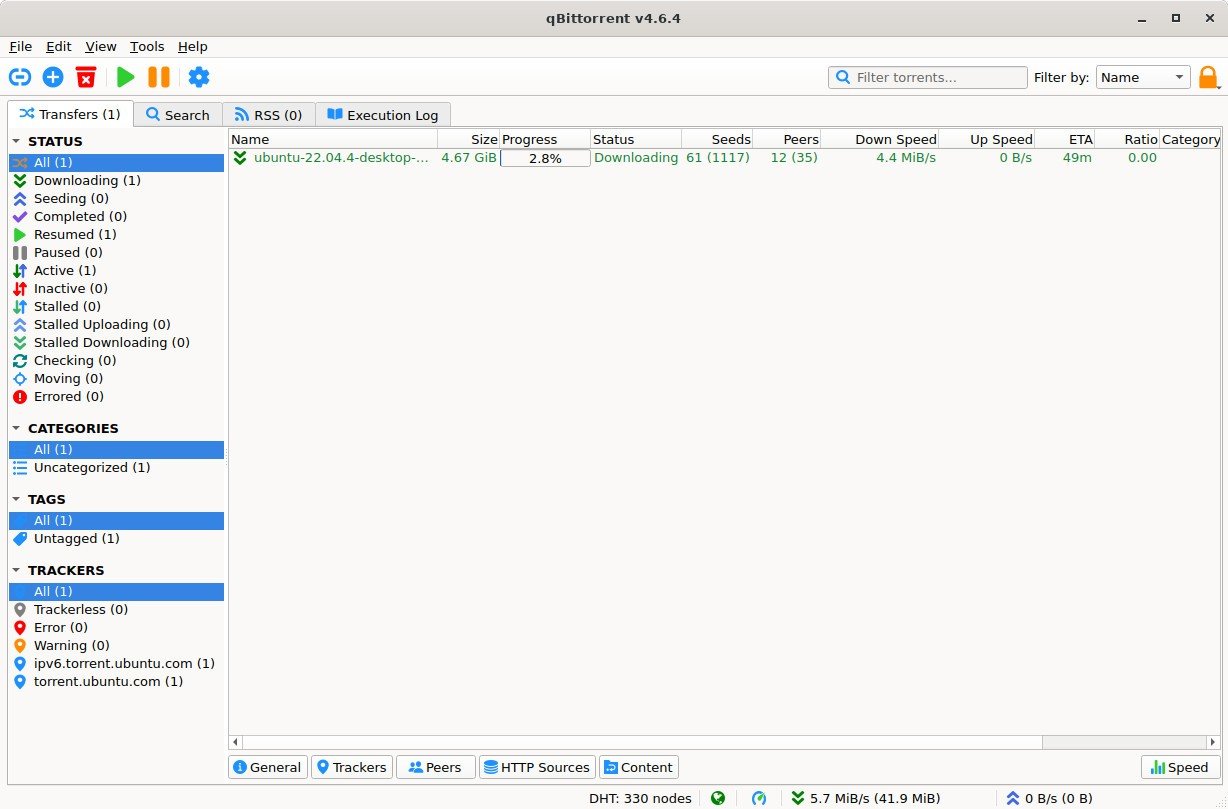
A torrent client is the application that reads a .torrent file or magnet link, contacts other peers and assembles the pieces. It is separate from the website that points you to a download. qBittorrent is a widely used open-source client; obtain it from its official project page or a trusted software catalogue such as Flathub. Keep it updated and avoid installers from ad-heavy download portals.
How BitTorrent distribution works
A publisher creates a torrent descriptor or magnet link for a file. The client uses that information to find peers who have some or all of the data. It downloads pieces from multiple peers and checks them against hashes in the torrent metadata. Once complete, the client can continue uploading pieces to other users; this is called seeding. Transfer speed depends on the number and quality of peers, your connection and the publisher’s distribution setup.
A careful download routine
- Navigate to the publisher’s official download page yourself, then follow its torrent link. Check the domain spelling before you open a file.
- Prefer projects that publish a checksum or signature and provide instructions for verifying it. A successful download is not proof that the file is genuine.
- Inspect the contents and file extensions before opening anything. A disk image from an operating-system project should not arrive as an unexpected executable installer.
- Keep your operating system and security software updated. Do not disable protection because a torrent page tells you to.
- Read the rights notice. Torrent technology does not change copyright, licence conditions or local law.
- Use a client’s bandwidth limits if transfers interfere with calls, games or other work. Seeding is useful to a project, but you should understand what you are sharing and whether you have the right to redistribute it.
Safety and privacy, without false promises
No VPN, browser or antivirus can make an unlawful download lawful or guarantee that a file is harmless. A VPN changes which network address other peers may see, but it does not validate the file, hide activity from every service or replace careful source checking. Browser extensions can also introduce risk; use a small set from the browser’s official store and review permissions.
A torrent client may expose your network address to peers in the same swarm. Consider whether that is appropriate for the material and connection you are using. If you are downloading at work, school or on a managed network, follow its rules. Do not use proxies or other tools to evade copyright enforcement or access controls.
Common questions
Are torrent sites illegal?
The protocol and a site’s existence do not settle the legality of a particular file. Rights, distribution permission and jurisdiction matter. Use official publisher downloads or material clearly released for redistribution.
Does a high seeder count mean the file is safe?
No. Seeder counts indicate peers offering pieces of a file, not who created it or whether distribution is authorised. Verify the publisher and, when available, the cryptographic checksum.
Should I leave a download seeding?
That depends on your connection, storage and the rights attached to the file. For an open-source image, seeding can help others obtain the official release. For any file, do not redistribute it unless you are allowed to.
Start with the source, not a ranking
For dependable legal torrents, begin at the publisher’s own download page: Ubuntu alternative downloads, Debian via BitTorrent, and the rights information on the relevant Internet Archive item. For software, see the qBittorrent project and its Flathub listing.
We do not recommend mirror lists, proxy pages or catalogues that mix authorised releases with unverified uploads. Those lists can go stale quickly and make it harder to identify the actual publisher.
Compare this page with our recommendations for verified torrent sources before deciding what to use. Browse the torrent-topic archive for related explainers.
More torrent guides
These practical articles cover the client, legal sources and file checks in more detail.